



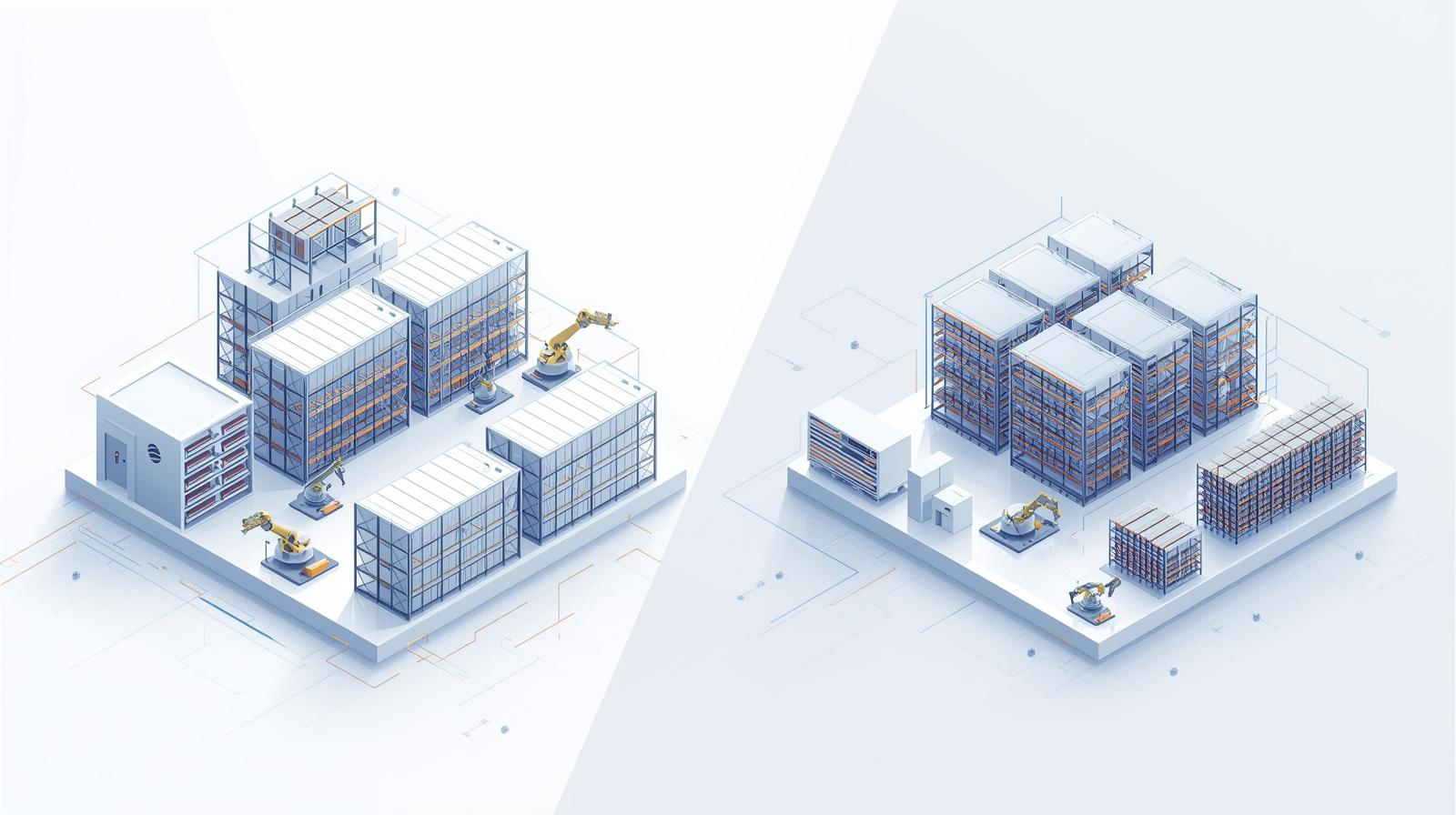
Strategic Insights for Operational Efficiency: Focus on Warehouse Workflow

Strategic Insights for Operational Efficiency:
Focus on Warehouse Workflow

Warehouse workflow defines the structured movement of tasks and inventory in a facility. Understanding warehouse workflow is critical for evaluating operational efficiency, scalability, and system integration.

Introduction

In modern supply chain management, warehouse workflow forms the backbone of operational efficiency, governing how goods, information, and resources move through a facility—from receipt to dispatch. For businesses in Southeast Asia and Malaysia, evaluating warehouse workflow is more than an operational task; it is a strategic imperative. Effective workflow design directly impacts inventory accuracy, labor allocation, and the speed of customer fulfillment, shaping both day-to-day operations and long-term competitiveness.

Beyond immediate operational effects, the architectural decisions behind warehouse workflow systems influence scalability, integration flexibility, and overall digital maturity. As companies evolve from basic inventory tracking toward more sophisticated warehouse management platforms, understanding the nuances of warehouse workflow becomes critical for aligning operational processes with broader strategic growth objectives.

Operational Challenges for SMEs

Although the sap warehouse logistics system offers powerful enterprise capabilities, SMEs often face operational challenges due to its large-scale architecture. Smaller warehouse teams typically require faster workflows, simpler system management, and immediate operational visibility. When these needs are not fully aligned with enterprise system structures, several practical challenges may emerge.

Task Sequencing and Bottlenecks

Task Sequencing and Bottlenecks

Organizing tasks in the right order helps identify delays in processes like picking and replenishment.

Process Standardization vs. Flexibility

Over-standardization can restrict responsiveness, whereas excessive flexibility can create inefficiencies and data inconsistencies.

Process Standardization vs. Flexibility
Workflow efficiency

Integration Points

Workflow efficiency is contingent on seamless interactions with procurement, order management, and transportation systems.

Data Visibility and Control

Operational visibility depends on real-time synchronization between stock locations, order statuses, and resource deployment.

Data Visibility and Control


How Warehouse Workflow Impacts Efficiency

Warehouse workflow essentially encapsulates the sequence of processes through which inventory is received, stored, picked, packed, and dispatched. At the same time, it reflects the structural logic of a facility, thereby balancing resource allocation with throughput efficiency.

Key structural considerations therefore include:

Resource Optimization

Efficient workflows allocate labor and equipment according to task priority, reducing idle time and improving throughput.

Inventory Accuracy

Structured workflows reduce human error in picking, packing, and stock recording, enhancing the reliability of inventory data.

Operational Visibility

Integrated workflows enable managers to monitor activities across zones, facilitating rapid response to disruptions.

Scalability Considerations

Workflows must accommodate varying order volumes, seasonal fluctuations, and multi-site operations without degrading performance.

Efficient workflows allocate labor and equipment according to task priority, reducing idle time and improving throughput.

Structured workflows reduce human error in picking, packing, and stock recording, enhancing the reliability of inventory data.

Integrated workflows enable managers to monitor activities across zones, facilitating rapid response to disruptions.

Workflows must accommodate varying order volumes, seasonal fluctuations, and multi-site operations without degrading performance.

However, trade-offs are inherent. Highly automated workflows can reduce labor requirements but increase capital expenditure and complexity, whereas manual-intensive workflows offer flexibility but are prone to variability in speed and accuracy. Organizations must balance these factors relative to operational scale, workforce skill, and technological readiness.

Improving Warehouse Workflow Step by Step

Enhancing warehouse workflow is less about tactical adjustments and more about evaluating structural design and operational alignment. Strategic interventions include:

Architectural Evaluation

Modular vs. Monolithic Systems

Modular vs. Monolithic Systems

Modular workflow architectures enable gradual expansion and automation integration, whereas monolithic systems simplify control but restrict flexibility.

Data Synchronization

Data Synchronization

Efficient workflows depend on consistent, real-time data exchange between warehouse zones and central ERP systems. Latency or misalignment introduces operational risk.

Process Optimization

Zonal Task Allocation

Zonal Task Allocation

Segmenting warehouses into functional zones reduce travel time, improves picking accuracy, and streamlines replenishment cycles.

Workflow Simulation

Workflow Simulation

Predictive modeling identifies capacity limits, enabling businesses to preemptively adjust staffing or equipment deployment.

Scalability and Integration

Multi-Site Coordination

Multi-Site Coordination

Sophisticated workflows account for inter-warehouse transfers, cross-docking, and regional fulfillment priorities.

Integration with Enterprise Systems

Integration with Enterprise Systems

Moreover, mature workflows interface seamlessly with procurement, sales, and analytics platforms, supporting strategic decision-making and growth.

Trade-Offs in Workflow Design

Trade-off analysis informs decision-making, particularly in SMEs where budget constraints necessitate careful prioritization between flexibility, accuracy, and long-term growth potential.

 
A robust warehouse workflow balances competing priorities:

Dimension Strategic Consideration Trade-Offs
Automation Level
Reduces manual errors and accelerates throughput
throughput Higher upfront costs; requires skilled maintenance
Process Standardization
Ensures consistency across shifts and sites
Limits flexibility for ad-hoc operational adjustments
System Integration
Enables real-time data and coordinated operations
Integration complexity may introduce latency or require custom development
Scalability
Supports growth without redesigning processes
Over-investment can lead to underutilized infrastructure
Operational Visibility
Facilitates proactive management and reporting
Requires investment in sensors, scanning, or tracking technologies


Conclusion

Warehouse workflow represents more than a sequence of tasks—it is a strategic lever influencing operational efficiency, scalability, and digital maturity. Businesses typically begin with basic inventory tracking systems suitable for low-complexity operations but gradually confront trade-offs in flexibility, visibility, and scalability as they grow. In this progression, platforms like PayRecon WMS exemplify purpose-built warehouse management solutions that facilitate operational sophistication without requiring a complete system overhaul.

Strategic evaluation of workflow design should therefore emphasize long-term alignment with organizational growth, operational visibility, and integration readiness. Companies that carefully assess workflow trade-offs position themselves to scale efficiently, optimize resource deployment, and maintain robust inventory accuracy, thereby supporting sustainable operational excellence.

[weglot_switcher]