How to Solve Constant Stockout Issues in a Fast-Growing Business
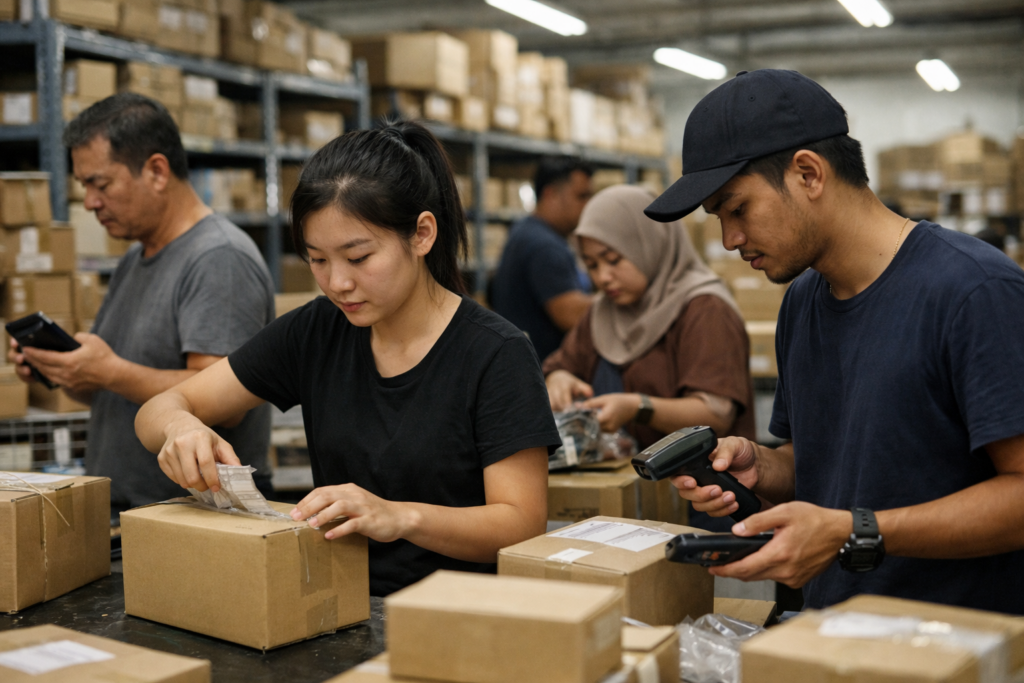
Rapid growth often exposes a hidden operational weakness: inventory systems designed for small-scale demand struggle to keep up. Many fast-growing businesses begin experiencing constant stockout issues once monthly orders exceed a few hundred units. To solve constant stockout issues, businesses need stronger inventory visibility, coordinated warehouse processes, and better demand planning.
Solve constant stockout issues at this stage is no longer just a purchasing task—it requires stronger inventory visibility, coordinated warehouse processes, and better demand planning.
At first glance, stockouts may appear to be a purchasing problem. In reality, they often signal deeper structural issues in inventory visibility, demand synchronization, and fulfillment coordination.
Businesses that successfully scale beyond this stage typically move from reactive inventory management to structured, system-driven control.
Quick Summary: How to Solve Constant Stockout Issues
To resolve constant stockout issues in a fast-growing business, companies typically need to address three operational layers:
- Inventory visibility: Real-time stock tracking across all sales channels
- Demand forecasting: Align purchasing cycles with sales velocity
- Operational coordination: Synchronize warehouse picking, receiving, and sales updates
Businesses experiencing rapid growth often find that spreadsheets or basic inventory tools cannot maintain accuracy once order volumes exceed several hundred per day.

Why Constant Stockout Issues Appear During Rapid Growth
Stockouts rarely happen because businesses underestimate demand alone. More commonly, they emerge when operational processes fail to scale with increasing transaction complexity.
Several structural factors contribute to this pattern:
1. Multi-channel sales fragmentation
Modern e-commerce sellers often operate across platforms such as marketplaces, webstores, and social commerce channels. Each platform may record sales independently, creating delays in stock synchronization.
Even a short delay can trigger overselling.

2. Delayed inventory updates
Many small businesses rely on manual adjustments or batch updates. When orders increase, inventory updates may lag behind actual sales activity, making available stock appear higher than it really is.
3. Warehouse processing bottlenecks
If warehouse teams process orders in batches rather than real time, inventory movement inside the warehouse may not immediately reflect system records.
These structural gaps gradually accumulate and result in frequent stockouts even when overall inventory levels appear adequate.
Demand Volatility and the Hidden Forecasting Problem
Fast-growing businesses often underestimate how quickly demand patterns can change.
Product performance on digital platforms can shift dramatically due to:
- Algorithmic promotion
- Influencer or affiliate traffic
- Flash sales and campaign periods
- Seasonal demand spikes
A product that normally sells 20 units per day might suddenly move 200 units within hours during a campaign.
Without structured demand forecasting, purchasing decisions become reactive. Businesses reorder only after inventory runs low, which creates a repeating cycle of stockouts and urgent restocking.
Effective forecasting requires analyzing sales velocity, lead times, and supplier reliability, not just historical sales totals.
The Operational Cost of Constant Stockout Issues

Stockouts carry costs that extend beyond lost sales.
Three major consequences often emerge:
- Customer trust erosion
Repeated stockouts signal unreliable supply. Customers may shift to competitors offering more consistent availability. - Platform ranking impact
Many e-commerce marketplaces penalize sellers whose listings frequently go out of stock, reducing product visibility. - Marketing inefficiency
Marketing campaigns become less effective when promoted products are unavailable. Advertising budgets may generate demand that cannot be fulfilled.
As businesses grow, these hidden costs can exceed the value of the lost orders themselves.
Structural Solutions That Solve Constant Stockout Issues

Businesses that successfully resolve constant stockout issues usually transition toward structured inventory systems rather than relying on manual coordination.
Key operational improvements include:
- Real-time inventory synchronization
A centralized inventory system ensures that all sales channels update stock levels instantly after each transaction. - Automated low-stock alerts
Instead of waiting for manual checks, automated alerts notify teams when inventory reaches predefined reorder thresholds. - Demand-linked purchasing cycles
Reordering decisions become tied to sales velocity and supplier lead times rather than fixed schedules. - Warehouse process visibility
Tracking picking, packing, and receiving activities helps ensure that inventory records match physical stock movement.
As order volumes increase, many companies eventually evaluate purpose-built warehouse management systems that integrate these functions.
Solutions such as PayRecon WMS represent one category of operational upgrade designed to connect sales channels, warehouse processes, and inventory tracking into a single system. Businesses typically consider such platforms once multi-channel order flows make manual coordination unreliable.
When Stockout Prevention Becomes a Systems Problem

At early stages, inventory management is mostly a discipline problem: counting stock accurately and ordering on time.
But once a business scales across multiple channels and hundreds or thousands of orders per day, stockout prevention becomes a systems design problem.
Three structural transitions typically occur:
- From manual tracking to automated inventory visibility
- From reactive restocking to data-driven forecasting
- From isolated sales channels to integrated fulfillment infrastructure
Companies that fail to make these transitions often experience persistent stockout cycles despite increasing inventory spending.
Conclusion: Solve Constant Stockout Issues
Constant stockout issues are rarely caused by demand alone. They usually emerge when business growth outpaces the operational systems used to track inventory and coordinate fulfillment.
For small businesses, simple process improvements may temporarily stabilize stock availability. However, once sales scale across multiple channels and order volumes rise significantly, structural solutions become necessary.
Businesses that adopt real-time inventory visibility, demand-linked purchasing, and integrated warehouse management are far more likely to maintain consistent stock availability.
In most cases, resolving constant stockout issues is not about holding more inventory—it is about building operational systems capable of supporting sustained growth.