How to Prevent Shopee Overselling Issues Across Channels

Overselling on Shopee rarely begins with demand spikes.
It usually starts with quiet mismatches between systems that appear “good enough” on the surface.
This article will guide you on How to Prevent Shopee Overselling Issues Across Channels.
Introduction
Prevent Shopee Overselling Issues has become a structural concern, not just an operational mistake.
Many sellers still believe overselling is caused by poor discipline or human error.
That assumption is outdated.
In today’s multi-channel environment, overselling is often the result of fragmented inventory logic. Sellers operate across Shopee, TikTok Shop, physical retail, and WhatsApp orders simultaneously. Each channel introduces latency, duplication, and decision conflicts.
Manual tracking fails not because it is careless, but because it is structurally incompatible with real-time commerce.
This article does not provide surface-level fixes.
Instead, it examines the underlying system conflicts that cause overselling, and how sellers must rethink inventory as a synchronized ecosystem rather than a static count.
Overselling Is a System Conflict, Not a Human Error
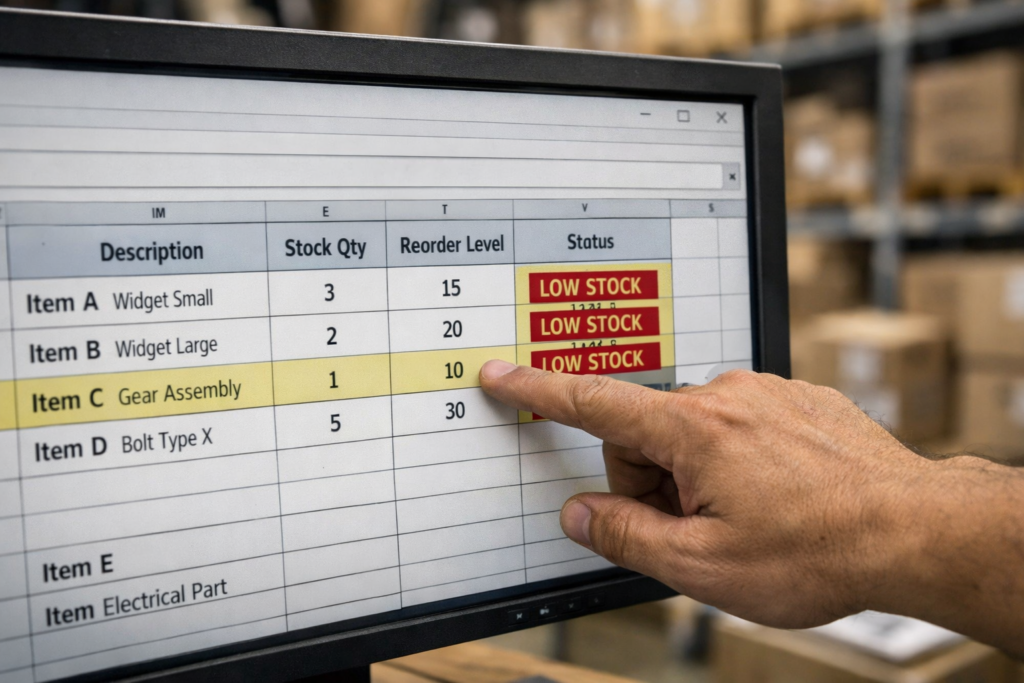
Manual tracking creates the illusion of control.
Spreadsheets appear organized, but they do not reflect live demand.
Every order placed on Shopee reduces available stock instantly.
However, manual systems update inventory retrospectively.
That delay creates a structural gap.
Even a short lag between order placement and stock adjustment can trigger overselling, especially during campaign periods or flash sales. The issue is not accuracy. It is timing.
Speed defines truth in inventory systems.
When multiple channels operate simultaneously, each one assumes it has access to the same stock pool. Without synchronization, each channel makes decisions based on outdated data.
This is where overselling begins.

Multi-Channel Expansion Quietly Multiplies Risk
Many Southeast Asian sellers scale through channel expansion.
Shopee is only one part of a larger revenue ecosystem.
A typical seller may operate across:
- Shopee for marketplace volume and campaigns.
- TikTok Shop for discovery-driven conversions.
- Offline or warehouse sales for bulk or B2B clients.
Each channel introduces its own order flow and timing behavior.
The complexity is not linear.
It compounds.
When inventory is tracked manually, each new channel increases the probability of mismatch. A sale on TikTok may not be reflected in Shopee immediately. Meanwhile, Shopee continues accepting orders based on outdated stock levels.
Growth creates fragility.
This is why sellers who scale successfully often encounter overselling more frequently, not less.
The Illusion of “Safe Stock Buffers”
Some sellers attempt to Prevent Shopee Overselling Issues by setting stock buffers.
They reduce visible inventory to create a safety margin.
This approach appears logical.
But it introduces a hidden trade-off.
Lower visible stock reduces conversion rates. Shopee’s algorithm favors listings with higher availability and fulfillment confidence. Artificially limiting stock may reduce exposure during high-demand periods.
Protection reduces opportunity.
Moreover, buffers do not solve synchronization delays.
They only delay the moment of failure.
Once demand exceeds the buffer, the same structural issue reappears.
Buffers treat symptoms, not causes.
Real-Time Visibility Is an Economic Advantage
Inventory is not just an operational metric.
It is a competitive signal.
Shopee’s ecosystem rewards sellers who can fulfill quickly and reliably. High fulfillment rates improve seller ratings, which influence visibility and trust.
Accuracy becomes leverage.
Real-time stock visibility allows sellers to align demand with supply dynamically. Instead of reacting to overselling incidents, they prevent them through synchronized decision-making.
This shifts inventory from passive tracking to active control.
The difference is strategic.
Sellers with synchronized systems can confidently participate in campaigns, knowing their stock data reflects reality. Others must limit participation to avoid risk.
Risk tolerance shapes growth.
Order Allocation Logic Determines Outcome Stability
Prevent Shopee Overselling Issues is not only about tracking stock.
It is also about deciding how stock is allocated.
When multiple orders arrive simultaneously, which channel gets priority?
Manual systems cannot answer this consistently.
Without predefined allocation logic, orders are processed in arbitrary sequences. This increases the likelihood of double allocation, where the same unit is effectively “reserved” by multiple channels.
Allocation defines fairness and efficiency.
Advanced sellers introduce rules such as:
- Channel prioritization during campaigns.
- Reserved stock pools for specific platforms.
- Dynamic allocation based on demand velocity.
These rules reduce conflict between channels.
More importantly, they create predictability.
Campaign Periods Expose Structural Weakness
Shopee campaigns amplify everything.
Traffic increases, order velocity accelerates, and system limitations become visible.
Manual tracking may appear sufficient during normal days.
But campaign periods reveal its breaking point.
Volume exposes truth.
During high-traffic events, even a few seconds of delay can result in dozens of oversold orders. The cost is not only refunds. It includes penalties, poor ratings, and reduced future visibility.
Short-term errors create long-term consequences.
This is why overselling is often reported after major campaigns rather than daily operations.
The system was always fragile.
The campaign simply revealed it.
From Manual Tracking to System Synchronization
At a certain scale, manual tracking becomes a bottleneck.
Not because it is inefficient, but because it cannot scale with demand complexity.
This is where system integration becomes relevant.
Warehouse management systems (WMS) introduce centralized inventory control. They synchronize stock across channels, update quantities in real time, and enforce allocation rules automatically.
The role of technology is not convenience.
It is structural alignment.
Solutions like PayRecon WMS represent one pathway sellers may evaluate when operations become multi-channel and high-volume. Such systems connect order flows, inventory updates, and fulfillment processes into a single synchronized layer.
This reduces latency and decision conflict.
However, adoption requires operational discipline.
Systems amplify structure, not fix chaos.
The Real Constraint: Operational Maturity
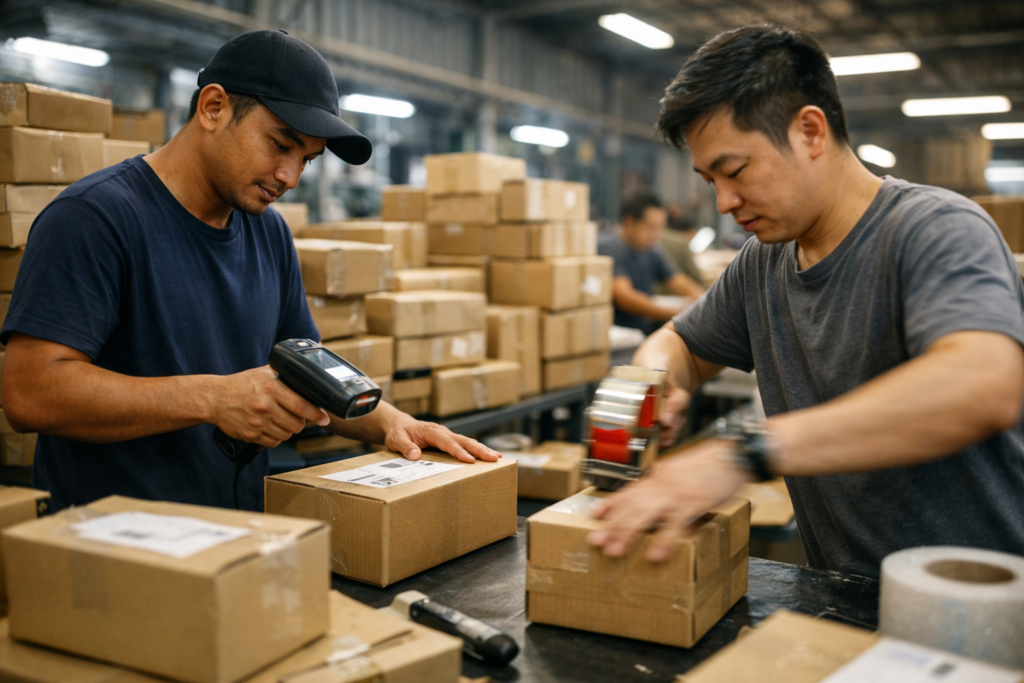
Prevent Shopee Overselling Issues ultimately depends on operational maturity.
Technology alone cannot resolve fragmented processes.
Sellers must first define:
- How inventory is shared across channels.
- How orders are prioritized and fulfilled.
- How stock updates are validated and audited.
Clarity precedes automation.
Without clear rules, even advanced systems may produce inconsistent outcomes. With clear rules, even simple systems can perform reliably within limits.
Structure determines scalability.
Conclusion: Overselling Is a Signal of Structural Misalignment

Overselling should not be viewed as an isolated mistake.
It is a signal.
A signal that inventory systems, channel strategies, and operational logic are no longer aligned.
Manual tracking can support early-stage growth.
But it becomes structurally unstable in multi-channel environments.
Sellers who aim for long-term scalability must rethink inventory as a synchronized system. This includes real-time visibility, defined allocation logic, and integrated fulfillment processes.
The opportunity is real.
But so is the constraint.
Prevent Shopee Overselling Issues is not about avoiding errors.
It is about building systems that make errors unlikely.
Those who achieve this gain more than accuracy.
They gain the confidence to scale without hesitation.