Is it worth the investment to automate a small warehouse in Malaysia?
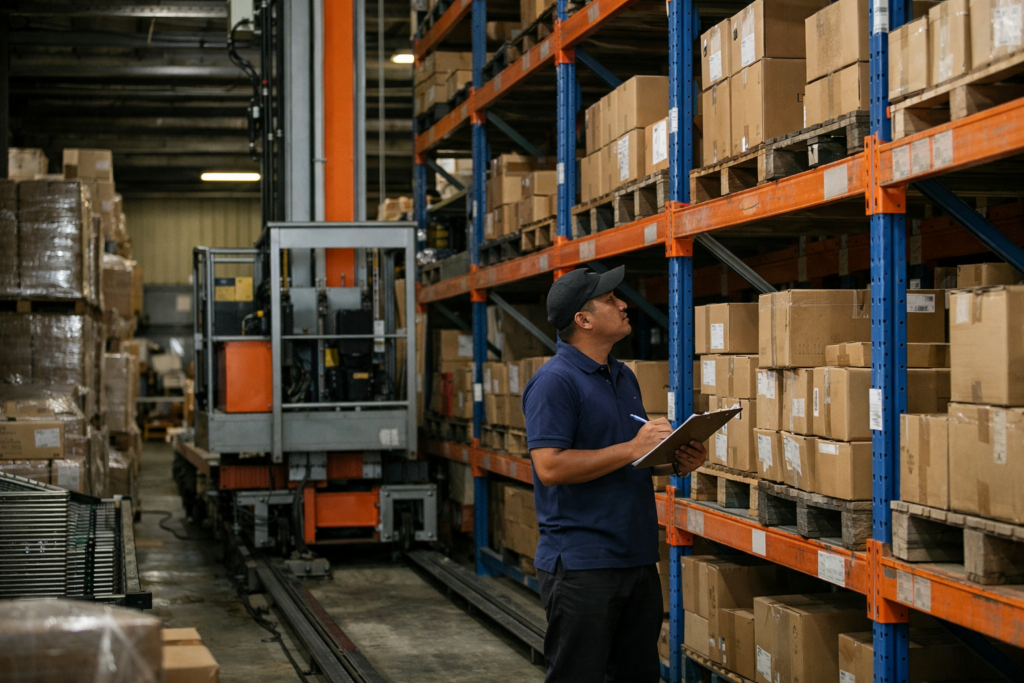
Warehouse owners in Malaysia face a dilemma: investing in automation promises efficiency gains, yet upfront costs remain substantial. Many small businesses hesitate, unsure if the returns justify automation. Misconceptions about affordability and complexity often cloud judgment. This article provides a structural analysis to clarify the true costs, operational implications, and strategic positioning of small warehouse automation investment in Malaysia.
Structural Cost Analysis and Capital Allocation
Automation is frequently perceived as a luxury reserved for large-scale operations. In reality, small warehouses can achieve measurable efficiency gains when investment decisions are data-driven. The first layer of analysis involves capital allocation. Upfront costs include robotics, conveyors, and warehouse management software integration. These are typically balanced against labor cost reductions, error mitigation, and throughput improvement.
Notably, smaller facilities benefit differently than large warehouses. Automation may not replace all human labor but can optimize repetitive tasks. For example, automated picking systems reduce the time spent on order assembly, while inventory tracking software minimizes stock discrepancies. The structural trade-off lies in capital intensity versus operational reliability.
Efficiency gains are nonlinear. Early investments may deliver moderate reductions in labor hours, while additional automation layers yield diminishing returns. Understanding this curve is crucial for small operators. Exposure is rented, not owned.
Risk-Return Considerations for Malaysian SMEs
Investing in automation entails both financial and operational risk. On the financial side, the cost of technology can strain cash flow if the expected throughput increase fails to materialize. Operationally, automated systems require training, maintenance, and occasional downtime. Misalignment between system complexity and warehouse scale can reduce ROI.
A key metric for risk assessment is payback period. For a small Malaysian warehouse handling RM500,000 in monthly inventory, automation that improves accuracy and picking speed may shorten order fulfillment times by 20–30%, translating to measurable cost savings. However, the same system may yield minimal gains for a warehouse with irregular order volume. Strategic selection of automation modules is critical.
Integration risk also matters. Many small warehouses in Malaysia operate with legacy accounting systems. Automation software that cannot interface seamlessly introduces inefficiencies rather than solving them. Here, scalable solutions like PayRecon WMS provide incremental integration options, reducing disruption and preserving operational continuity.
Comparative Efficiency and Labor Dynamics
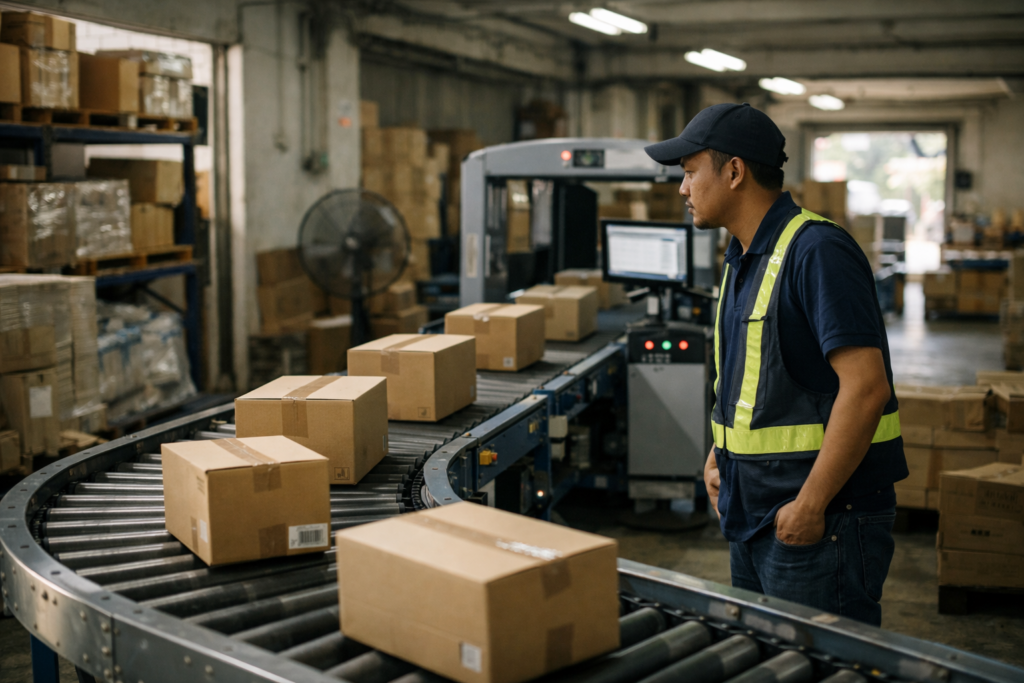
Labor dynamics in Malaysia significantly influence automation ROI. Small warehouses often rely on temporary or seasonal workers, especially during peak e-commerce periods. Automation mitigates the dependency on variable labor, providing consistent throughput and reducing error rates. It also allows redeployment of human resources toward higher-value tasks, such as quality control or customer service.
Comparative analysis shows that automation reduces picking errors by up to 70% in optimized setups. While not every warehouse achieves these numbers, small-scale implementations targeting high-frequency SKUs often capture a disproportionate share of efficiency gains. The operational principle is to automate bottlenecks rather than entire workflows.
Sustainability is another consideration. Automated systems reduce unnecessary movement and manual handling, lowering energy use over time. This can align with ESG objectives for businesses seeking compliance or investor attention. Efficiency is structural, not cosmetic.
Structural ROI Modeling
A critical step in evaluating small warehouse automation investment in Malaysia is constructing a structural ROI model. The model incorporates capital expenditure, labor savings, error reduction, throughput increase, and operational flexibility. By scenario-testing different investment levels, managers can identify the automation threshold where marginal benefits equal marginal costs.
For instance, a warehouse with RM200,000 monthly inventory turnover might achieve a 15% reduction in operational cost through selective automation modules. Scaling the model allows estimation of potential RM savings over 12 months. Such quantitative frameworks move the decision from speculation to evidence-based judgment.
Integration with accounting and inventory software amplifies these benefits. Automation alone optimizes physical operations, but connecting it to real-time reporting ensures strategic oversight. Structural visibility enables proactive restocking and demand planning, reducing lost sales due to stock-outs.
Strategic Positioning and Competitive Implications
Beyond operational metrics, automation shapes market positioning. Small Malaysian warehouses adopting selective automation can offer faster fulfillment, lower error rates, and improved customer satisfaction. These advantages become competitive differentiators, particularly for e-commerce businesses operating in saturated sectors.
Automation also facilitates expansion into multi-channel operations. When warehouses can handle complex inventory flows efficiently, they can onboard additional marketplaces or corporate clients without proportional increases in labor costs. This structural scalability underpins long-term growth potential.
However, automation is not a panacea. Over-investment relative to warehouse scale can lock capital in underutilized equipment. The strategic principle is alignment: match automation intensity with operational complexity.
Incremental Adoption Pathways
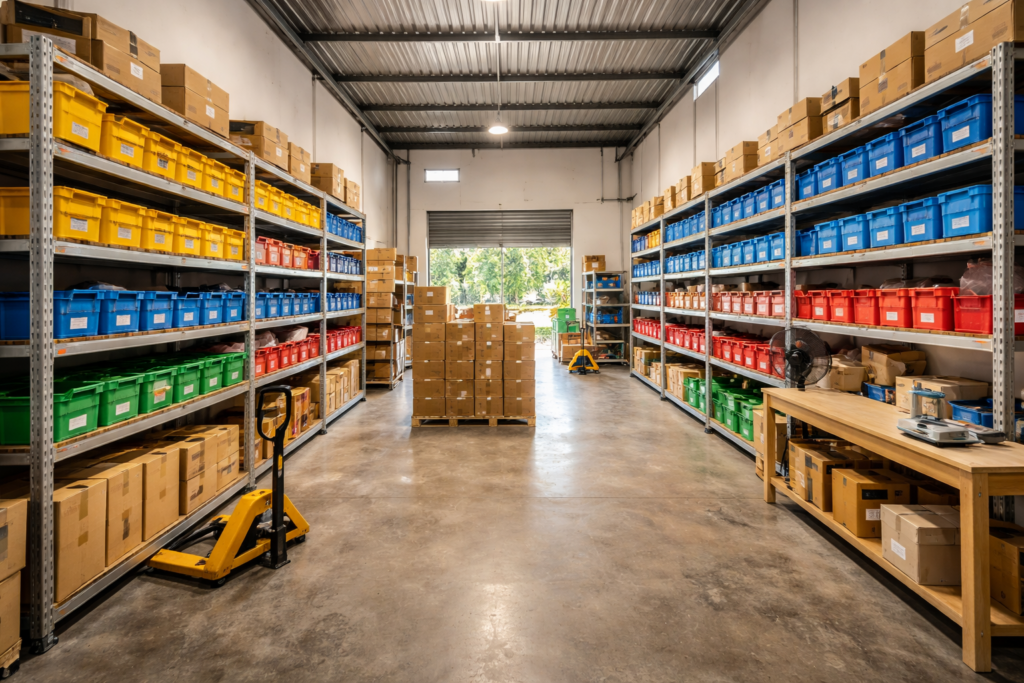
For small warehouse operators, phased automation offers risk mitigation. Initial modules might include automated barcode scanning, order verification systems, or inventory tracking sensors. These tools improve accuracy and throughput with limited capital exposure. Gradual expansion can integrate robotic picking or conveyor systems once the ROI threshold is validated.
Software integration plays a critical role in this incremental approach. Systems like PayRecon WMS provide modular adoption, allowing warehouses to scale functionality without disruptive overhauls. Incremental automation reduces exposure while preserving optionality. Algorithmic reach determines opportunity.
This pathway contrasts with full-scale automation deployments, which often demand simultaneous hardware, software, and workflow redesign. For smaller Malaysian warehouses, incremental adoption preserves flexibility and aligns with realistic budget constraints.
Opportunity Cost and Long-Term Perspective
Evaluating small warehouse automation investment in Malaysia requires considering opportunity costs. Capital allocated to automation is unavailable for marketing, product expansion, or workforce development. Decision-makers must weigh the relative impact of efficiency gains versus alternative investments. Structural judgment, not impulse, drives sustainable outcomes.
Long-term perspective favors modular, scalable solutions. Automation provides structural resilience against labor shortages, seasonal demand spikes, and marketplace expansion pressures. In contrast, undercapitalized investments in rigid systems can constrain agility and increase operational risk.

Conclusion: Scalable Under Strategic Conditions
Small warehouse automation in Malaysia is structurally beneficial when applied selectively and strategically. ROI depends on aligning automation modules with bottleneck processes, integrating with accounting and inventory systems, and adopting a phased implementation approach. For warehouses with RM200,000–RM500,000 monthly turnover, automation can yield measurable cost reductions, error mitigation, and operational scalability.
However, over-investment or misaligned systems reduce returns. The prudent approach emphasizes incremental adoption, structural analysis, and software integration as a foundation for expansion. PayRecon WMS exemplifies this pathway, offering modular solutions to increase efficiency without locking capital into underutilized hardware.
In sum, small warehouse automation investment in Malaysia is realistic and scalable under specific operational conditions. Strategic prioritization, scenario-based ROI modeling, and phased deployment are critical for sustainable benefits. Focused automation transforms operational complexity into competitive advantage, ensuring structural gains without compromising financial flexibility.