
The Real Limits of the Autocount Warehouse System for SMEs
The Autocount warehouse system enables SMEs to streamline inventory control and warehouse operations, balancing efficiency with the limitations of scaling complexity and integration maturity.
Introduction
In the evolving landscape of SME logistics, the autocount warehouse system represents a foundational step toward structured inventory and operational management. For many small and medium enterprises in Southeast Asia, adopting such a system provides immediate visibility into stock movements and basic warehouse process automation, bridging the gap between manual spreadsheets and full-fledged warehouse management platforms. While it is often positioned as a cost-effective and accessible solution, businesses must carefully evaluate whether it aligns with their long-term operational ambitions.
Strategically, the autocount warehouse system offers a framework for controlling stock levels, tracking goods via barcode warehouse systems, and standardizing workflows. Yet, its architecture and workflow design introduce inherent trade-offs in terms of scalability, integration, and operational visibility. Companies must weigh the benefits of simplified deployment against the potential constraints imposed by limited automation, data synchronization challenges, and constrained reporting capabilities.
Moreover, understanding where such a system fits into growth trajectories is crucial. SMEs with moderate inventory complexity can leverage autocount warehouse system effectively, while enterprises approaching higher transaction volumes or multi-site operations may confront limitations in workflow orchestration and data centralization. Transitioning to more advanced platforms often becomes a strategic necessity rather than a tactical choice.
Strategic Evaluation of Autocount Warehouse System
The autocount warehouse system primarily excels in streamlining core inventory operations for SMEs, but this advantage comes with architectural and operational considerations that influence long-term value.
Operational Visibility and Workflow Control
The system’s design facilitates straightforward inventory monitoring and barcode-based transaction logging. However, businesses must recognize that:

Real-time visibility is limited to the system’s scope and may not integrate seamlessly with broader ERP or procurement systems.

Warehouse process automatic is often rule-based, requiring manual intervention for complex cross-docking or batch allocation scenarios.

Operational maturity is constrained by fixed workflow templates, which may necessitate workarounds as business processes evolve.

Scalability Considerations
Transitioning from a small warehouse to a multi-location operation exposes several scalability limitations:

Data synchronization delays can occur when multiple sites or cloud-based modules are involved, and also reducing operational cohesion.

Expansion of item master data or SKU variants can strain system performance, impacting inventory tracking accuracy.

Automation capabilities are often bounded by predefined logic, limiting flexibility for customized task assignments or dynamic prioritization.

Integration and Digital Maturity
While the autocount warehouse system provides a foundational layer for digital inventory management, integrating with downstream sales, e-commerce, or accounting platforms may require middleware or custom connectors.

Barcode warehouse system implementation ensures accurate tracking but depends on consistent scanning protocols and disciplined user adherence.

ERP or procurement integration is possible but may necessitate manual reconciliation processes.

Long-term digital maturity requires evaluating whether the platform supports data exports and API connectivity sufficient for predictive analytics and operational forecasting.

Key System Strengths
Before adopting the autocount warehouse system, businesses typically analyze specific capabilities relative to their current operational footprint:
Key limitations include:
Inventory Tracking Simplicity
Reduces errors compared to manual record-keeping.
Barcode Warehouse System Compatibility
Supports streamlined scanning and identification.
Process Standardization
Encourages consistent workflows across receiving, storage, and dispatch.
Cost-Effective Deployment
Provides a solution suitable for SMEs without significant IT overhead.
Structural Limitations and Trade-Offs
While the autocount warehouse system provides SMEs with a solid foundation for inventory control and workflow standardization, its structural design introduces inherent limitations that affect operational scalability and flexibility. One significant constraint is the rigidity of its workflow templates, which can restrict businesses from adapting processes to evolving operational needs. As transaction volumes increase or warehouse complexity grows, relying on fixed process models may force teams to implement ad hoc workarounds, potentially creating inefficiencies and inconsistencies.
Integration with other enterprise systems also exposes trade-offs. Although the system supports core barcode warehouse functionalities, connecting it seamlessly with ERP, procurement, or analytics platforms often requires manual intervention or additional middleware. This can introduce latency in data synchronization, reduce visibility across multiple warehouse sites, and limit the speed at which management can make strategic decisions. Furthermore, while automation is supported, it is primarily rule-based and lacks the dynamic flexibility necessary for sophisticated prioritization, exception handling, or real-time task allocation.
Scalability presents another structural consideration. The system performs well for moderate SKU volumes and single-site operations, but as inventory diversity expands or multi-location management becomes necessary, performance may degrade. This limitation underscores a fundamental trade-off between simplicity and long-term operational maturity: the system offers immediate control and cost efficiency but at the expense of flexibility, integration depth, and readiness for high-growth scenarios. Understanding these structural trade-offs is essential for SMEs when evaluating whether to continue with the platform or plan for a strategic upgrade to more robust warehouse management solutions, such as purpose-built platforms like PayRecon WMS.
Strategic Pathways for SMEs
SMEs often use autocount warehouse system as a stepping stone toward more robust solutions. Strategic decisions focus on balancing immediate operational needs with long-term scalability:
Incremental Process Automation
Begin with standardized workflows before adopting advanced task engines.
Data Consolidation Planning
Establish consistent data governance for future ERP integration.
Operational Maturity Benchmarks
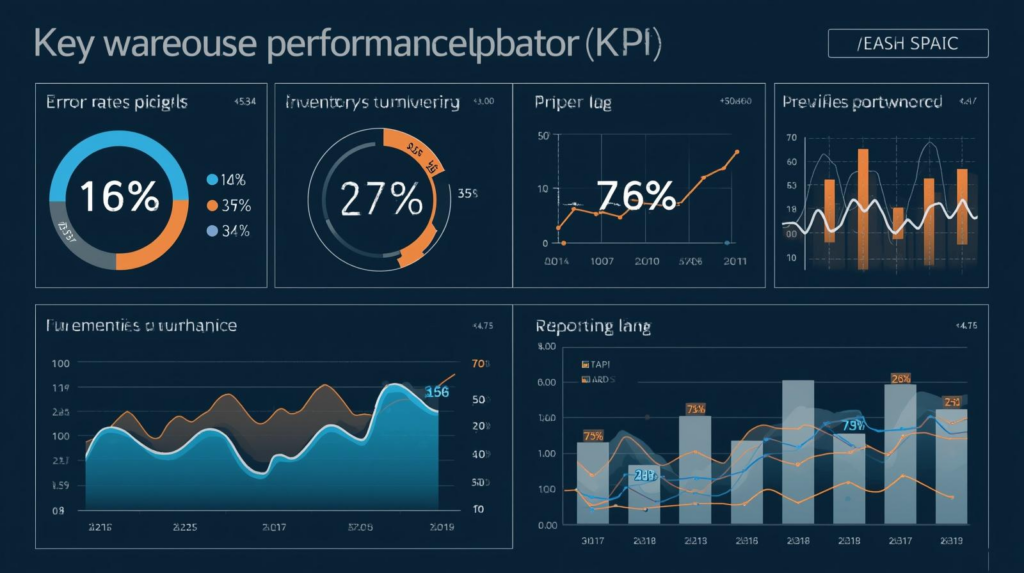
Monitor error rates, inventory turnover, and reporting lag.
Workforce Training Alignment
Ensure staff are proficient with barcode and process protocols.
Evaluation of Purpose-Built Platforms
Consider solutions like PayRecon WMS as complexity increases.
Phased Transition Planning
Gradually migrate to advanced systems to maintain operational continuity.
Conclusion
The autocount warehouse system provides SMEs with structured inventory control, barcode-based accuracy, and basic workflow standardization. Its strengths make it a practical starting point for businesses seeking operational visibility and process discipline. However, the system’s fixed workflow templates, limited automation flexibility, and integration constraints highlight the trade-offs that emerge as business complexity grows.
As SMEs expand inventory volume, diversify SKUs, or operate across multiple sites, they often outgrow entry-level warehouse systems. At this stage, purpose-built platforms like PayRecon WMS offer enhanced workflow orchestration, better data synchronization, and scalable automation, supporting a more mature and digitally integrated warehouse operation. Strategic planning should anticipate this progression to maintain efficiency and long-term operational maturity.