Xilnex Stock Inventory Management Review

A strategic analysis of Xilnex stock inventory architecture, examining stock balance accuracy, stock aging visibility, and inventory valuation challenges as retail businesses scale toward warehouse-level operational complexity.
Introduction
Retail management systems frequently include inventory modules designed primarily to support point-of-sale synchronization and store-level operations. Within this category, Xilnex stock inventory represents a retail-oriented inventory framework intended to maintain product availability, synchronize sales with stock deductions, and support routine retail reporting.
However, inventory systems embedded inside retail platforms often reveal structural trade-offs when operational scale increases. While early-stage retailers typically focus on maintaining stock balance accuracy, growing businesses begin to face deeper operational questions: inventory movement transparency, stock aging monitoring, and inventory valuation reliability across multiple storage locations.
Consequently, evaluating Xilnex stock inventory requires understanding not only its features but also its architectural assumptions. The system’s design philosophy aligns closely with retail workflows, yet inventory management in modern SMEs increasingly overlaps with warehouse logistics, multi-channel distribution, and complex fulfillment structures.
Therefore, this analysis examines how Xilnex stock inventory fits within the broader inventory system landscape and where its structural strengths—and limitations—begin to emerge as operational complexity grows.
Understanding the Role of Xilnex Stock Inventory in Retail Systems
Retail management platforms typically integrate inventory functions tightly with sales transactions. In this design approach, stock movement is largely triggered by point-of-sale events, purchase orders, and manual adjustments.
Within this structure, Xilnex stock inventory provides the operational backbone for store-level stock monitoring. The system is designed to maintain synchronization between product sales and stock deductions while supporting daily operational visibility.
Typical operational responsibilities supported by such inventory modules include:
Real-time deduction of stock during retail transactions
Monitoring of stock balance accuracy across store locations
Basic inventory reporting and summary analytics
Support for retail replenishment cycles
Product catalog and SKU-level stock visibility
However, while this architecture works efficiently for retail storefronts, its design assumptions reflect the priorities of store operations rather than warehouse logistics. As a result, the structural focus remains transaction-driven rather than movement-driven.
This distinction becomes significant once businesses begin managing larger stock volumes, distributed storage locations, or more advanced inventory valuation requirements.
For further industry background on inventory accounting practices, readers may refer to the overview provided by the Corporate Finance Institute:
https://corporatefinanceinstitute.com/resources/accounting/inventory-valuation/
Architectural Design Assumptions Behind Xilnex Stock Inventory
Inventory systems differ significantly depending on whether they originate from retail software, enterprise resource planning platforms, or warehouse management environments.
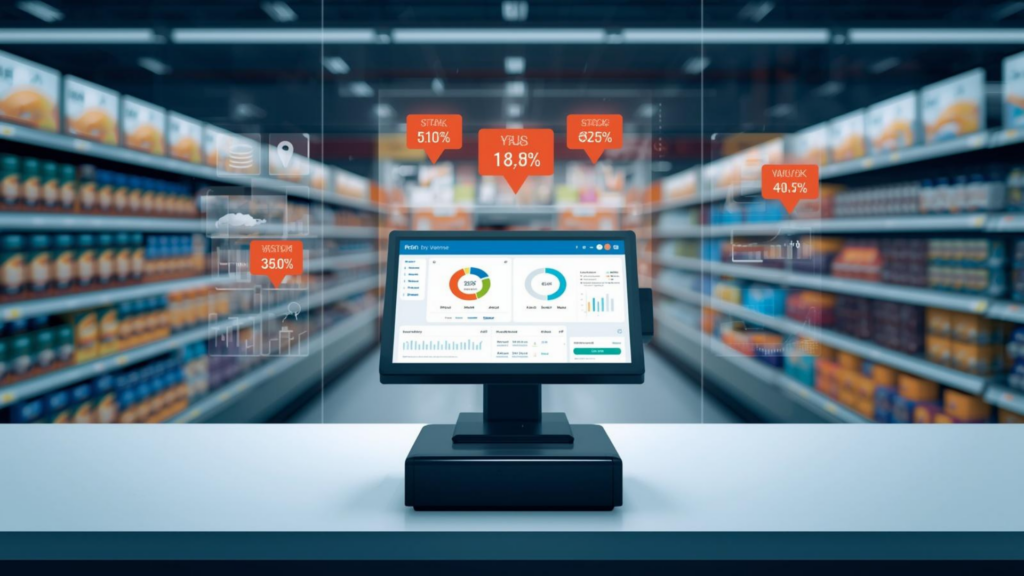
The architecture of Xilnex stock inventory reflects a retail-first approach, where inventory records function primarily as a supporting dataset for sales activity.
This design carries several structural advantages.
Structural Strengths
Tight POS Integration
Retail transactions immediately update inventory records. Consequently, stock balance accuracy within store environments remains reliable when operations follow standard retail workflows.
Operational Simplicity
Retail teams benefit from simplified inventory dashboards that prioritize daily operational tasks rather than complex logistics tracking.
Lower Operational Overhead
Because the system assumes centralized retail stock pools, businesses avoid the complexity typically associated with warehouse-directed workflows.
However, these advantages rely on several assumptions:
Inventory movements originate primarily from sales
Stock storage locations remain limited
Warehouse processes are minimal or centralized
Once these assumptions change, architectural constraints begin to appear.
Stock Balance Accuracy and Operational Visibility
Maintaining stock balance accuracy is one of the most visible metrics for evaluating any inventory system. However, accuracy itself is influenced by how inventory movements are recorded, validated, and synchronized across systems.
In retail-first architectures such as Xilnex stock inventory, stock accuracy is usually tied to transactional integrity. As long as sales, returns, and purchases are correctly recorded, the inventory ledger remains consistent.
Nevertheless, operational complexity introduces additional variables:
|
Operational Factor
|
Impact on Inventory Systems
|
|---|---|
|
Multi-location storage
|
Requires location-level stock tracking
|
|
Transfer movements
|
Requires detailed inventory movement logs
|
|
Warehouse picking workflows
|
Requires process-based stock updates
|
|
Batch or serial tracking
|
Requires item-level traceability
|
Without movement-level tracking, businesses may experience situations where inventory reports remain technically correct while operational visibility becomes fragmented.
For example, a retail chain operating both storefronts and fulfillment warehouses may find that stock aging insights become difficult to interpret if inventory movement histories are not deeply recorded.
Background discussions on inventory control frameworks can be explored through the MIT Supply Chain Management program resources:
https://scm.mit.edu/
Stock Aging Analysis and Inventory Lifecycle Management
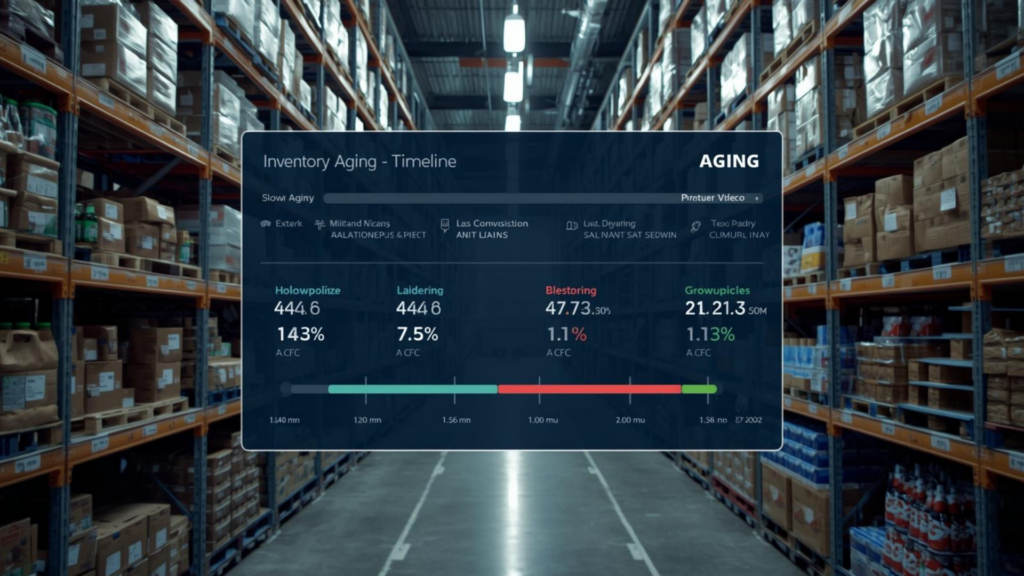
As businesses scale, inventory management shifts from simple stock tracking toward lifecycle optimization. One of the most important analytical dimensions in this transition is stock aging.
Stock aging analysis evaluates how long products remain in storage before being sold or moved. In retail environments, this metric helps businesses identify:
Slow-moving products
Seasonal inventory accumulation
Overstocking risks
Pricing strategy adjustments
However, effective stock aging analysis requires detailed timestamped inventory movements across multiple operational stages.
Retail-oriented systems such as Xilnex stock inventory can provide basic aging reports. Yet the analytical depth often depends on how inventory movement events are recorded within the system.
If warehouse handling, inter-location transfers, and picking operations occur outside the primary inventory module, aging visibility may become partially disconnected from real operational flows.
Therefore, businesses managing large SKU catalogs or seasonal inventory cycles often require more granular lifecycle tracking.
Inventory Valuation and Financial Reporting Considerations
Beyond operational visibility, inventory systems also play a critical role in financial reporting. The reliability of inventory valuation directly affects financial statements, tax calculations, and profit margin analysis.
Most SMEs rely on standard valuation methodologies such as:
FIFO (First-In, First-Out)
Weighted average cost
Standard cost accounting
More details on these accounting methods can be reviewed through the IFRS Foundation guidance:
https://www.ifrs.org/
Within retail-oriented architectures like Xilnex stock inventory, valuation calculations typically rely on purchase records and aggregated stock balances.
While this approach works well for straightforward retail flows, it becomes more complex when:
Products move across multiple storage locations
Inventory is repackaged or bundled
Warehouse picking and staging processes affect stock states
These operational realities introduce layers of inventory states that traditional retail modules may not fully capture.
Consequently, businesses undergoing operational expansion often begin evaluating systems with stronger warehouse-centric inventory logic.

Scalability Considerations for Growing SMEs
Many Southeast Asian SMEs initially adopt retail management platforms to support physical storefronts. Over time, however, digital commerce channels, distribution partnerships, and fulfillment operations introduce new logistical complexity.
At this stage, the operational environment may include:
Retail storefronts
E-commerce marketplaces
Centralized warehouses
Third-party logistics partners
When inventory systems remain primarily retail-oriented, synchronization challenges can begin to appear.
Examples include:
Delayed updates between online and physical inventory pools
Limited visibility into warehouse picking status
Reduced clarity in multi-location stock aging reports
Within this operational context, Xilnex stock inventory may continue to function effectively for retail sales synchronization. However, businesses often begin evaluating complementary systems designed specifically for warehouse-level orchestration.
Operational Evolution Toward Warehouse Management Systems
Inventory management maturity often follows a predictable progression:
| Growth Stage | System Orientation |
|---|---|
|
Early retail |
POS-based inventory |
|
Multi-store expansion |
Retail inventory consolidation |
|
Distribution growth |
Warehouse coordination |
|
Multi-channel fulfillment |
Warehouse management systems |
Once operations require structured warehouse workflows—such as bin-level tracking, directed picking, and movement auditing—retail-oriented inventory modules may no longer provide sufficient operational visibility.
At this stage, businesses frequently explore warehouse management platforms that specialize in inventory movement orchestration rather than transaction-based stock deduction.
Solutions such as PayRecon WMS, for example, are designed around warehouse processes rather than retail transactions. In practice, systems in this category typically introduce features such as:
bin-location inventory structures
barcode-based picking workflows
warehouse transfer traceability
real-time operational dashboards
Importantly, these systems are not necessarily replacements for retail management platforms. Instead, they often function as operational layers that support increasingly complex supply chain environments.
Conclusion
Evaluating Xilnex stock inventory requires recognizing the operational context in which it was designed to operate. As a retail-oriented inventory framework, the system performs effectively when inventory flows are closely tied to sales transactions and store-level operations.
However, inventory management complexity tends to increase as businesses expand into multi-location distribution, e-commerce fulfillment, and warehouse-based logistics. In these environments, deeper visibility into stock balance accuracy, stock aging, and inventory valuation becomes critical for maintaining operational clarity.
Retail inventory modules can often support early and mid-stage retail growth. Nevertheless, as inventory movement workflows become more sophisticated, structural limitations may emerge—not because the system is flawed, but because its design assumptions prioritize retail efficiency rather than warehouse orchestration.
Consequently, businesses frequently adopt additional operational layers to support logistics maturity. Warehouse management platforms such as PayRecon WMS represent one example of this evolutionary step, providing movement-centric inventory control that complements retail systems rather than replacing them outright.
Understanding when this transition becomes necessary is less about specific software features and more about recognizing the operational signals that indicate a shift from retail inventory management toward full supply chain coordination.