WMS vs. ERP: How to Choose the Right System for Your E-commerce Business in Malaysia
#WMS vs ERP #Warehouse Management System for E-commerce

As e-commerce businesses scale, backend operations often become the first major bottleneck. Inventory inaccuracies, delayed fulfilment, and rising operational costs are common pain points—especially for small and medium-sized businesses.
This is where the WMS vs. ERP question typically arises.
Many Malaysian e-commerce owners assume that implementing an ERP system is the “next logical step” for growth. However, in practice, the real challenge is not enterprise planning—it is warehouse execution. Understanding the difference between WMS vs. ERP, and knowing which one fits your current operational stage, is critical to making a cost-effective and scalable system decision.
This guide is designed to help you evaluate both options clearly and decide which system your e-commerce business actually needs.
Table of Contents
Before You Start (Preparation)
Before comparing WMS vs. ERP, it is essential to assess your business objectively. System selection should be driven by operational reality, not software trends.
Key Questions to Answer:
Are inventory discrepancies a frequent issue?
Is order picking slow or error-prone?
Do you sell across multiple platforms (Shopee, Lazada, TikTok Shop, website)?
Are warehouse processes still manual or spreadsheet-based?
Do you already use accounting software or a basic ERP?
Why This Matters
According to SAP, ERP systems are designed to integrate company-wide business processes, while WMS focuses on real-time warehouse execution.
Source: https://www.sap.com/products/erp/what-is-erp.html
Source: https://www.sap.com/products/scm/extended-warehouse-management/what-is-a-wms.html
Understanding this distinction early prevents over-investment and implementation failure.
Step-by-Step Guide to Choosing Between WMS vs. ERP
Step 1 : Understand the Core Purpose of WMS vs. ERP
An ERP (Enterprise Resource Planning) system typically manages:
Accounting and finance
Procurement
Sales and invoicing
Human resources
Regulatory and financial reporting
Source (Oracle):
https://www.oracle.com/erp/what-is-erp/
A WMS (Warehouse Management System) is purpose-built to handle:
Inventory tracking and stock accuracy
Picking, packing, and dispatch workflows
FIFO / FEFO / batch and expiry control
Warehouse location and movement tracking
Source (IBM):
https://www.ibm.com/topics/warehouse-management-system
While ERP systems may include inventory modules, they are not optimised for high-frequency e-commerce fulfilment.
Step 2 : Identify Where Your Operational Problems Actually Occur
This is the most important step in the WMS vs. ERP decision.
If your daily problems include:
Overselling or stockouts
Mismatched physical vs system stock
Slow order fulfilment
High return rates due to picking errors
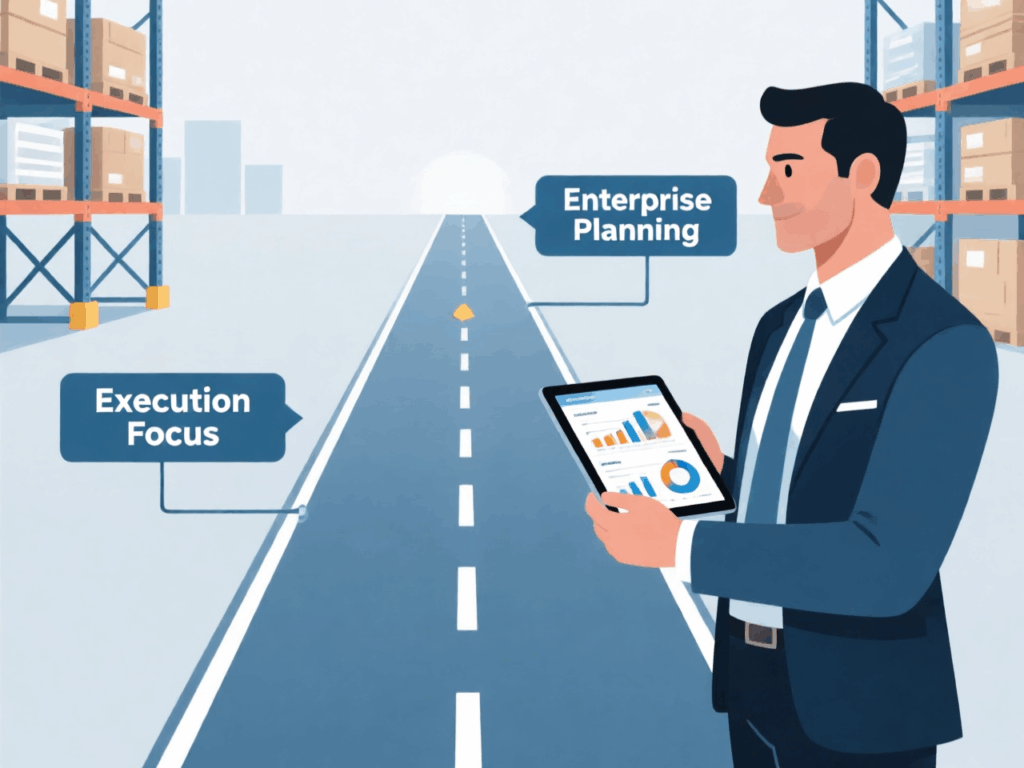
Then your issue is warehouse execution, not enterprise planning.
Industry studies consistently show that warehouse inefficiencies account for a significant portion of fulfilment costs in e-commerce operations.
Source (McKinsey): https://www.mckinsey.com/industries/retail/our-insights/how-retailers-can-improve-warehouse-productivity
Step 3: Match the System to Your Business Stage
For most small and mid-sized e-commerce businesses in Malaysia:
Warehouse complexity increases earlier than financial complexity
ERP systems are often implemented too early, leading to low ROI
According to Gartner, ERP systems deliver value only when internal processes are already well-defined and stable.
Source: https://www.gartner.com/en/information-technology/glossary/enterprise-resource-planning-erp
In contrast, WMS implementations tend to deliver faster operational impact because they directly affect daily fulfilment activities.
Step 4: Think Integration, Not Replacement
WMS vs. ERP is not an “either-or forever” decision.
A common and practical approach is:
Implement WMS to stabilise inventory and fulfilment
Improve warehouse accuracy and efficiency
Integrate WMS with ERP or accounting software when business complexity increases
This modular approach reduces risk and preserves future flexibility.
Common Mistakes to Avoid
Mistake 1: Choosing ERP for Brand Perception
ERP systems are often perceived as “enterprise-grade,” but perception does not equal suitability.
Mistake 2: Ignoring Warehouse-Level Reality
No ERP system can compensate for inefficient picking, poor stock discipline, or unclear warehouse workflows.
Mistake 3: Overestimating Team Readiness
ERP implementations require high data discipline and cross-department coordination. Without this, adoption suffers.
Tips for Better Results
Address the largest operational bottleneck first
Prioritise systems with high daily usage impact
Choose tools your warehouse team can adopt quickly
Ensure the system supports future ERP integration
These principles are consistently recommended across supply chain best practices.
Source (Supply Chain Digital): https://supplychaindigital.com/technology/top-benefits-warehouse-management-systems
How PayRecon Helps?
PayRecon WMS is designed specifically for e-commerce and retail businesses that need precise inventory control and efficient warehouse operations—without the complexity of a full ERP system.
PayRecon WMS supports:
Real-time inventory accuracy
FIFO, batch, and expiry management
Faster picking and fulfilment
Multi-channel order processing
Integration readiness with accounting or ERP systems
Rather than replacing ERP, PayRecon WMS complements it by strengthening the operational layer where most e-commerce inefficiencies occur.
Conclusion: Final Thoughts on WMS vs. ERP
When evaluating WMS vs. ERP, the key question is not which system is more powerful—but which system solves your most urgent problems today.
From a practical standpoint, and based on real-world e-commerce operations, most growing businesses do not fail due to poor planning. They struggle because of poor execution at the warehouse level. Inventory inaccuracies and fulfilment delays directly impact customer satisfaction and cash flow.
In my view, starting with a WMS is often the more realistic, lower-risk decision for e-commerce businesses. It delivers visible operational improvements quickly and builds a solid foundation for future system expansion—including ERP, when the time is right.
If you are currently evaluating WMS vs. ERP and want guidance tailored to your business stage, speak with PayRecon to understand how our WMS can support your warehouse operations and long-term growth.
👉 Contact PayRecon today to learn more about how PayRecon WMS fits your e-commerce business.