Logistics Service Integration: Why Your Warehouse System Needs It
Introduction
In today’s fast-moving supply chain environment, warehouses can no longer operate as isolated systems. Orders, inventory, and deliveries must move seamlessly between platforms. This is where logistics service integration becomes essential.
By integrating logistics services directly into your warehouse system, businesses gain better visibility, faster operations, and fewer manual errors—all critical for scaling efficiently.

What Is Logistics Service Integration?
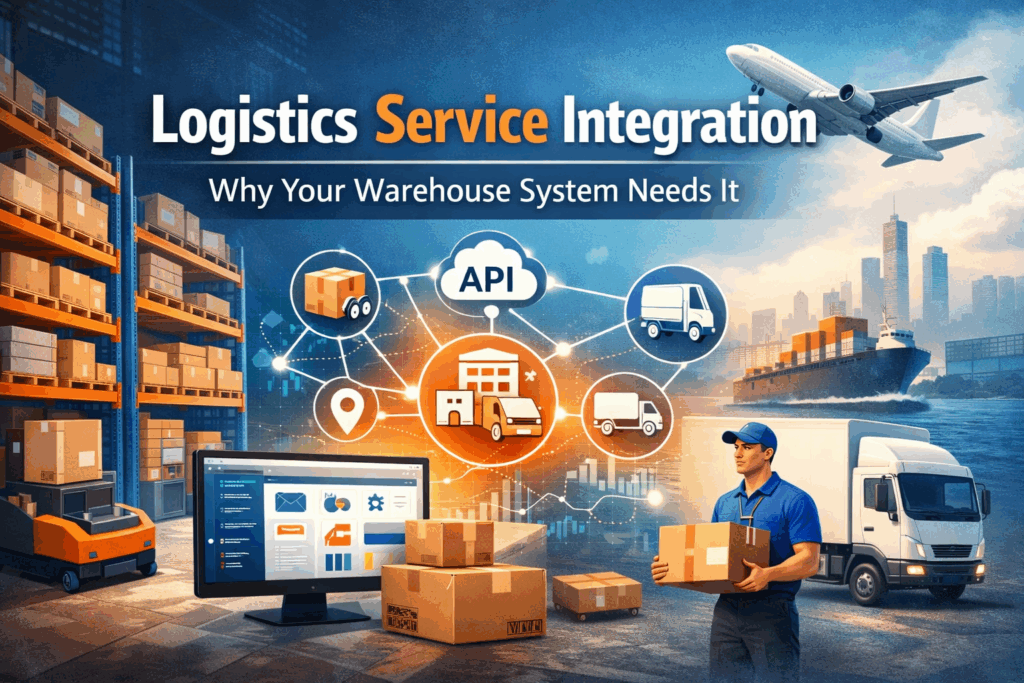
Logistics service integration refers to connecting your warehouse management system (WMS) with external logistics providers such as couriers, 3PL partners, and shipping platforms.
Instead of switching between multiple systems, all logistics-related activities—shipping rates, tracking numbers, delivery status—are handled within one centralized warehouse system.
Why Your Warehouse System Needs Logistics Integration
1. Faster Order Fulfillment
Manual data transfer slows down warehouse operations. With logistics integration, shipping orders are automatically sent to logistics partners the moment an order is packed.
This significantly reduces processing time and speeds up deliveries.
2. Fewer Human Errors
Manual entry often leads to incorrect addresses, wrong courier selection, or missing tracking numbers.
An integrated warehouse system eliminates repetitive data input, reducing costly shipping mistakes.
3. Real-Time Tracking Visibility
Logistics integration allows real-time tracking updates to flow back into the warehouse system.
Warehouse teams and customer service can instantly check shipment status without logging into multiple courier portals.
4. Better Scalability for Business Growth
As order volume increases, manual logistics handling becomes unsustainable.
A warehouse system with logistics service integration can easily support multiple couriers, regions, and higher order volumes—without increasing operational complexity.
5. Improved Customer Experience
Customers expect fast delivery updates and accurate tracking information.
With integrated logistics services, businesses can provide timely shipping notifications and reliable delivery status, improving customer satisfaction and trust.

Key Features to Look for in a Logistics-Integrated Warehouse System
Multi-courier integration support
Automated shipment creation
Real-time tracking synchronization
Flexible logistics API integration
Centralized shipping dashboard
These features ensure your warehouse system can adapt to changing logistics needs
Conclusion
Logistics service integration is no longer a “nice-to-have” feature—it is a necessity for modern warehouse operations.
By integrating logistics services into your warehouse system, businesses can streamline workflows, reduce errors, and scale confidently in a competitive market.
A warehouse system that supports seamless logistics integration lays the foundation for faster fulfillment, better visibility, and long-term operational efficiency.
Contact Us
Looking to simplify your warehouse operations with seamless logistics service integration?
Our team can help you find the right warehouse system that connects smoothly with your logistics partners and supports your business growth.
👉 Contact us today to learn how an integrated warehouse system can improve efficiency, reduce errors, and streamline your fulfillment process.