When Warehouse Error Rate Signals the Need for System Transition

Inefficient picking and packing disrupts warehouse flow, increasing delays and errors while exposing structural limitations in workflow design, operational visibility, and system scalability.
Introduction
Inefficient picking and packing has increasingly become a structural constraint rather than a simple operational inconvenience in modern warehouse environments. As order volumes rise and SKU diversity expands, the picking and packing process evolves from a repetitive manual task into a critical control point that determines fulfillment speed, cost efficiency, and accuracy. Consequently, inefficiencies in this area are rarely isolated; instead, they signal deeper issues in workflow architecture, data synchronization, and operational coordination.
Moreover, inefficient picking and packing tends to compound over time. What begins as minor delays or occasional mispicks gradually escalates into systemic friction, particularly in SMEs across Southeast Asia where hybrid workflows—part manual, part digital—are common. As a result, businesses often find themselves balancing throughput against accuracy, without fully addressing the structural misalignment causing the inefficiencies. Therefore, understanding inefficient picking and packing requires not only identifying surface-level problems but also evaluating the underlying system design choices that shape warehouse performance.
Why Warehouse Error Rate Increases Over Time
Inefficient picking and packing does not emerge randomly; rather, it develops as operational complexity outpaces system design. As warehouses scale, the interaction between inventory layout, order profiles, and labor coordination becomes increasingly interdependent. Consequently, small inefficiencies in routing logic or task allocation can cascade into significant delays.
Furthermore, inefficient picking and packing often reflects a misalignment between process standardization and real-world variability. While standardized workflows improve predictability, they can also reduce flexibility when SKU velocity or order patterns shift. Therefore, inefficiency arises not from the absence of structure, but from rigid structures applied to dynamic environments.
Key structural drivers include:
⚠️
Static picking routes in dynamic environments
Fixed paths fail to adapt to fluctuating SKU demand, increasing travel time and congestion
⚠️
Fragmented data visibility
Disconnected systems prevent real-time inventory validation, leading to mispicks and rework
⚠️
Batch processing limitations
While batching improves efficiency at scale, it introduces delays when order urgency varies
⚠️
Manual exception handling
Human intervention in error resolution slows throughput and introduces inconsistency
⚠️
Inefficient slotting strategies
Poor SKU placement increases travel distance and picker fatigue
Common Picking and Packing Problems
At an operational level, inefficient picking and packing occur through recurring execution failures. However, these picking and packing problems are often symptoms rather than root causes, reflecting deeper issues in system coordination and workflow design.
In many Malaysian SMEs, for instance, warehouse picking inefficiency is not due to labor capability but rather to inconsistent process logic. As operations grow, informal practices that once worked begin to break down under volume pressure, leading to visible inefficiencies.
Common picking and packing problems include:
High mispick rates
Incorrect item selection due to unclear location mapping or outdated inventory data
Order consolidation delayst
Difficulty synchronizing items from multiple picking zones
Over-reliance on manual checks
Redundant verification steps that slow packing throughput
Inefficient task allocation
Lack of dynamic assignment leads to uneven workload distribution
Packing inconsistencies
Variability in packaging decisions affecting shipping cost and damage rates
High mispick rates
Order consolidation delayst
Over-reliance on manual checks
Inefficient task allocation
Packing inconsistencies
How Inefficient Picking Slows Fulfillment
The impact of inefficient picking and packing extends beyond the warehouse floor, directly influencing fulfillment performance and customer experience. As inefficiencies accumulate, they create latency across the entire order lifecycle, from picking initiation to final dispatch.
Additionally, inefficient picking and packing introduces variability into fulfillment timelines. While some orders may be processed quickly, others experience delays due to congestion, rework, or coordination failures. This inconsistency reduces predictability, which is critical for scaling operations and meeting service-level agreements.
Key fulfillment impacts include:

Increased order cycle time
Longer picking durations delay downstream packing and shipping
Higher rework frequency
Errors detected during packing require repicking, doubling effort
Throughput bottlenecks
Congestion in picking zones limits overall warehouse capacity
Reduced labor productivity
Time spent on non-value-added activities lowers efficiency
Customer dissatisfaction
Delays and inaccuracies affect delivery reliability and brand trust
Architectural Trade-offs in Addressing Inefficient Picking and Packing
Addressing inefficient picking and packing is not simply a matter of adding tools or increasing labor. Instead, it requires navigating architectural trade-offs that shape how workflows are designed and executed. Different approaches offer varying benefits, but each introduces its own constraints.
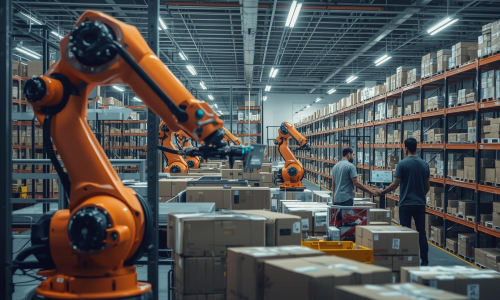
For example, increasing automation in picking processes can reduce human error; however, it also reduces flexibility when order variability is high. Similarly, implementing strict workflow controls improves consistency but may slow down exception handling.
Key trade-offs include:
Automation vs. flexibility
Automated systems improve accuracy but may struggle with non-standard orders

Centralized control vs. decentralized execution
Centralized systems enhance visibility but can create decision bottlenecks

Standardization vs. adaptability
Structured workflows ensure consistency but may not respond well to demand fluctuations
Speed vs. accuracy
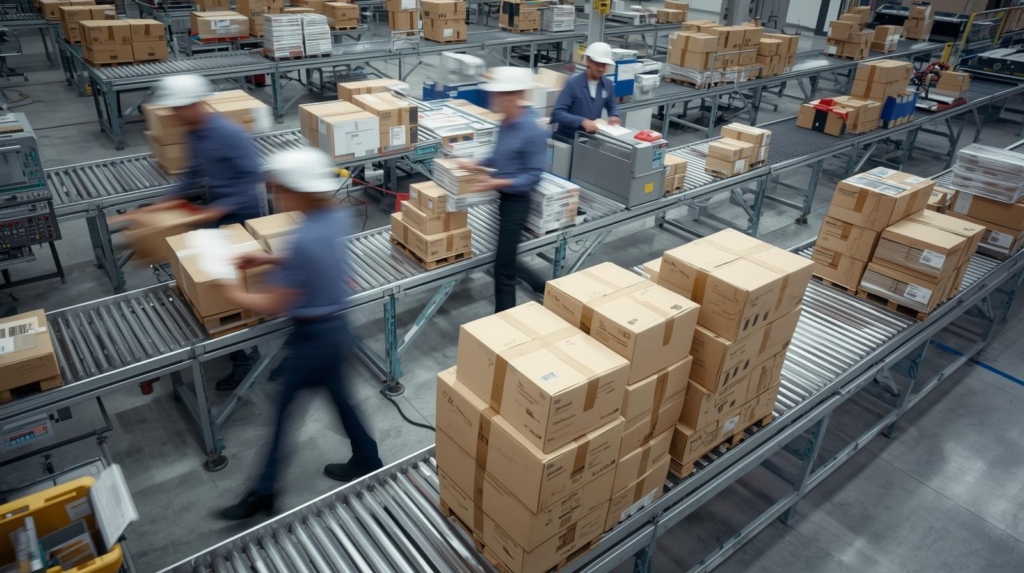
Optimizing for faster picking may increase error rates if validation mechanisms are weak

Integration depth vs. system complexity
Deeper integration improves data flow but increases implementation and maintenance overhead
Operational Maturity and Warehouse Picking Inefficiency
Inefficient picking and packing often correlates strongly with an organization’s operational maturity. Early-stage businesses typically rely on manual coordination and informal processes, which can work at low volumes. However, as transaction complexity increases, these approaches quickly become limiting.
In Southeast Asia, many SMEs undergo a transitional phase where digital tools are introduced incrementally rather than systematically. As a result, warehouse picking inefficiency often arises from partial digitization—some processes automated while others remain manual—creating workflow discontinuities.
Indicators of maturity-related inefficiency include:
Partial digitization and inventory misalignment
Delayed or inconsistent updates across systems cause picking errors and mispicks.
Inconsistent process enforcement
Variability in how tasks are executed across teams or shifts significantly reduces predictability.
Limited performance insights
Weak analytics hinder identification of bottlenecks and opportunities for workflow optimization.
Scalability and decision constraints
Difficulty handling increased order volumes without proportional labor, often coupled with reactive, manual interventions.
System Evolution Pathways Beyond Inefficient Picking and Packing
As inefficient picking and packing becomes a persistent constraint, businesses often reach a point where incremental improvements are no longer sufficient. At this stage, the focus shifts from optimizing individual tasks to redesigning the overall workflow architecture.
This transition typically involves evaluating solutions that can orchestrate picking and packing processes more coherently. Rather than addressing isolated picking and packing problems, these approaches aim to align data, workflows, and execution layers into a unified structure.
Strategic evolution pathways include:
- Workflow orchestration platforms: Coordinating picking, packing, and inventory updates in real time
- Dynamic slotting and routing: Continuously optimizing SKU placement and picking paths
- Integrated data environments: Ensuring consistency across inventory, orders, and fulfillment systems
- Scalable process frameworks: Supporting growth without linear increases in labor
- Exception management systems: Automating error detection and resolution





Conclusion
Inefficient picking and packing ultimately reflects a deeper misalignment between operational complexity and system design. While surface-level picking and packing problems may appear manageable, their cumulative impact reveals structural weaknesses in workflow coordination, data synchronization, and process scalability. Therefore, businesses must move beyond reactive fixes and instead evaluate the architectural foundations of their warehouse operations.
Moreover, as organizations grow, the tolerance for inefficiency decreases. What was once acceptable in low-volume environments becomes a critical bottleneck at scale. Consequently, inefficient picking and packing serves as an early indicator that existing systems are approaching their limits, prompting a reassessment of workflow design and technology integration.
In this context, warehouse management platforms such as PayRecon WMS represent a logical progression rather than a quick solution. They align with a broader operational evolution where efficiency is achieved through coordinated systems rather than isolated improvements. However, the decision to adopt such systems depends on timing, operational maturity, and the organization’s readiness to transition from manual coordination to structured workflow orchestration.