Supply Chain Software vs Warehouse Management System: Which One Is Better for Your Business?

Introduction: Why This Comparison Matters
When evaluating digital tools to streamline logistics, the comparison between Supply Chain Software vs Warehouse Management System (WMS) isn’t just semantics — it’s fundamental to directing your investment toward the right layer of technology.
Choosing between these systems affects how your business:
- plans and coordinates goods flow across suppliers and customers
- controls daily warehouse execution
- manages cost, accuracy, and efficiency
A mismatch — for example, investing in a full SCM suite when your core issue is operational warehouse inefficiency — can delay ROI, create integration problems, and leave teams frustrated.
This blog will help you understand the core differences, practical pros & cons, and which solution fits your business needs, so you don’t waste budget on overlapping or premature systems.
Table of Contents
Overview of Option A — Supply Chain Software

Definition
Supply Chain Software (often part of SCM suites) provides a holistic management layer for the entire supply chain — from sourcing raw materials to delivering finished goods. It optimizes planning, coordination, and logistics collaboration across departments, partners, and geographic locations.
Core Capabilities
- Supplier relationship management
- Demand forecasting
- Production planning & scheduling
- Logistics and distribution planning
Who It’s Suitable For
- Supply Chain Software is ideal for:
- Mid-to-large enterprises with complex sourcing networks
- Businesses aiming to synchronize procurement, production, and distribution
- Companies needing advanced forecasting and cost optimization
In essence: Supply Chain Software decides and orchestrates what should happen across the value chain.
Overview of Option B — Warehouse Management System (WMS)

Definition
A Warehouse Management System (WMS) is a specialized software designed to manage and automate the day-to-day operations inside warehouses or distribution centers — from receiving goods to order fulfillment and shipping. (source)
Core Capabilities
Real-time inventory tracking
Bin/location optimization
Barcode / RFID scanning
Picking, packing & staging workflows
Who It’s Suitable For
A WMS is the right choice when:
Your warehouse operations suffer from stock inaccuracies
Picking errors and order delays impact customer satisfaction
You need higher operational throughput and control
In practical terms: A WMS ensures what’s planned actually happens correctly on the warehouse floor.
Comparison Table (Core Section)
| Criteria | Supply Chain Softwareer | Warehouse Management System (WMS) |
|---|---|---|
|
Primary Goal |
End-to-end supply chain coordination |
Day-to-day warehouse execution |
|
Scope |
Entire supply network |
Inside warehouse & distribution center |
|
Typical Users |
Supply chain planners & executives |
Warehouse managers & operators |
|
Core Features |
Forecasting, procurement, logistics optimization |
Inventory tracking, picking, fulfillment |
|
Data Focus |
Cross-functional, big-picture |
Real-time, operational accuracy |
|
Cost |
Typically higher; enterprise level |
Scales with warehouse size |
|
Implementation Time |
Medium to long |
Shorter; operational focus |
|
Impact Speed |
Strategic improvements |
Immediate warehouse performance gains |
Pros & Cons of Each
Supply Chain Software
Strengths
✔ Provides strategic visibility across planning and logistics
✔ Enables collaboration across departments and partners
✔ Powerful analytics for long-term optimization
Weaknesses
✘ Broader scope means slower immediate operational impact
✘ Requires quality data inputs (often from WMS/ERP)
✘ Higher complexity and cost
Warehouse Management System (WMS)
Strengths
✔ Boosts inventory accuracy and reduces fulfillment errors
✔ Improves productivity and order throughput
✔ Quick returns once properly deployed
Weaknesses
✘ Focused only on the warehouse surface — not the full end-to-end chain
✘ Needs integration with ERP or SCM for broader visibility
Which Option Should You Choose?
Here’s a practical way to decide based on your business type:
✅ If Your Core Challenge Is Warehouse Execution
Frequent stock mismatches
Picking/packing errors
Slow fulfillment cycles
👉 Start with a WMS. It delivers immediate operational control and accuracy.
✅ If You Struggle With Cross-Enterprise Coordination
Forecasting demand is inaccurate
Logistics costs are unstable
Multiple partners and transport layers are involved
👉 Supply Chain Software is your priority.
✅ If You Need Both
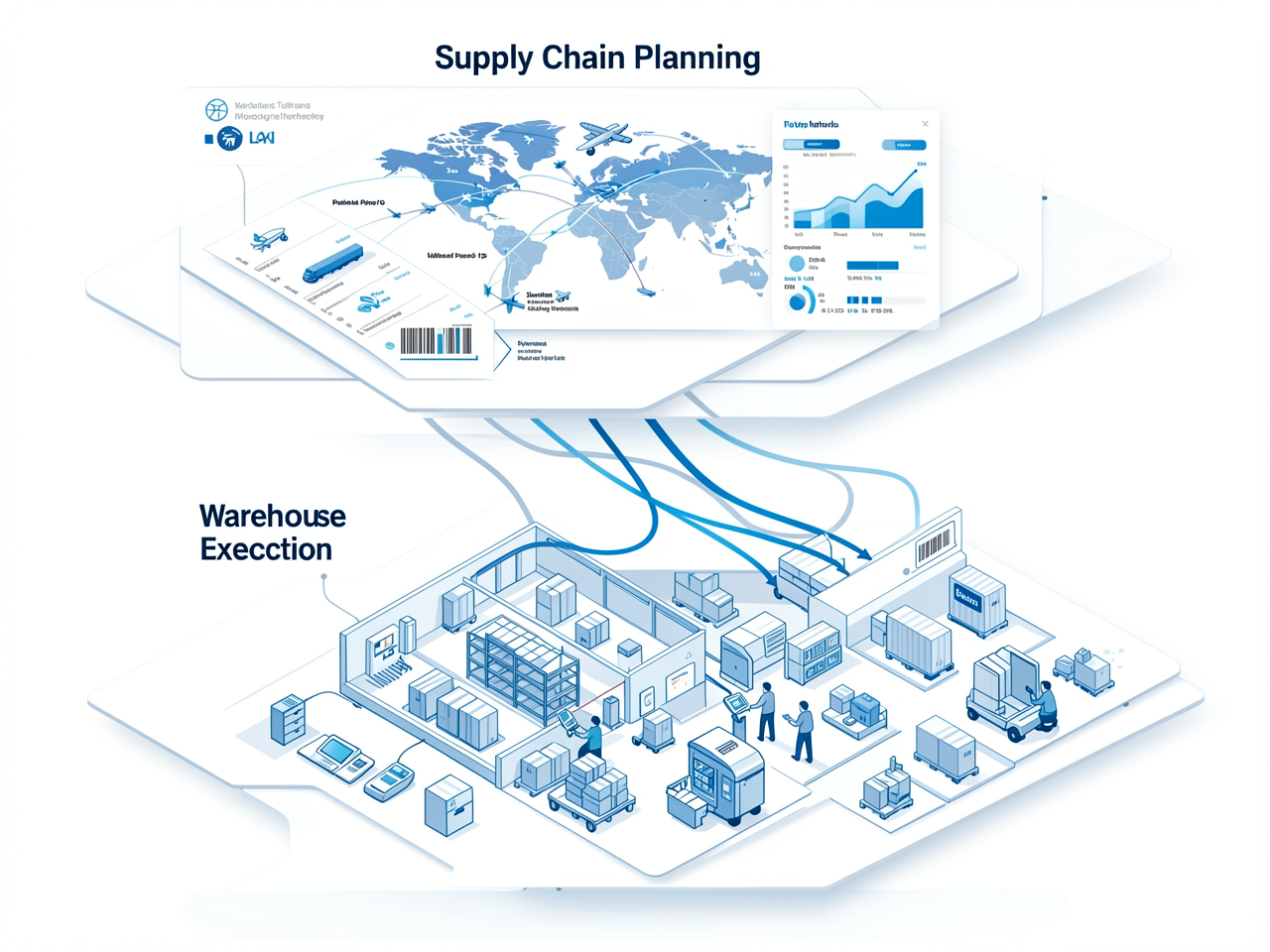
Many mature businesses eventually use both systems:
Supply Chain Software for planning and optimization
WMS for execution and operational control
Together, they drive seamless inventory flow from order inception to customer delivery.
Conclusion
Choosing between Supply Chain Software vs Warehouse Management System is not an either/or decision — it’s about which layer of your operations needs the most support right now.
👉 If execution inaccuracies and warehouse inefficiencies are holding you back, a well-implemented WMS delivers measurable gains quickly.
👉 If your challenge is coordinating planning, logistics, and supplier networks, then an SCM-oriented Supply Chain Software is the strategic answer.
From my experience advising operational teams, many businesses prematurely invest in broad SCM thinking before fixing foundational warehouse execution issues — that’s like installing a GPS before ensuring your car’s engine runs smoothly. Starting with a solid WMS often builds the accurate, real-time data that larger SCM systems rely on.
If you’re unsure where to start or want to evaluate a system tailored to your business context, contact PayRecon to assess your operational landscape and find the best path forward — whether that’s a WMS, a broader Supply Chain Software suite, or a phased integration strategy.
👉 Get in touch with PayRecon to explore customized solutions and next steps.