How Poor Warehouse Planning Leads to Operational Chaos and Hidden Cost Structures
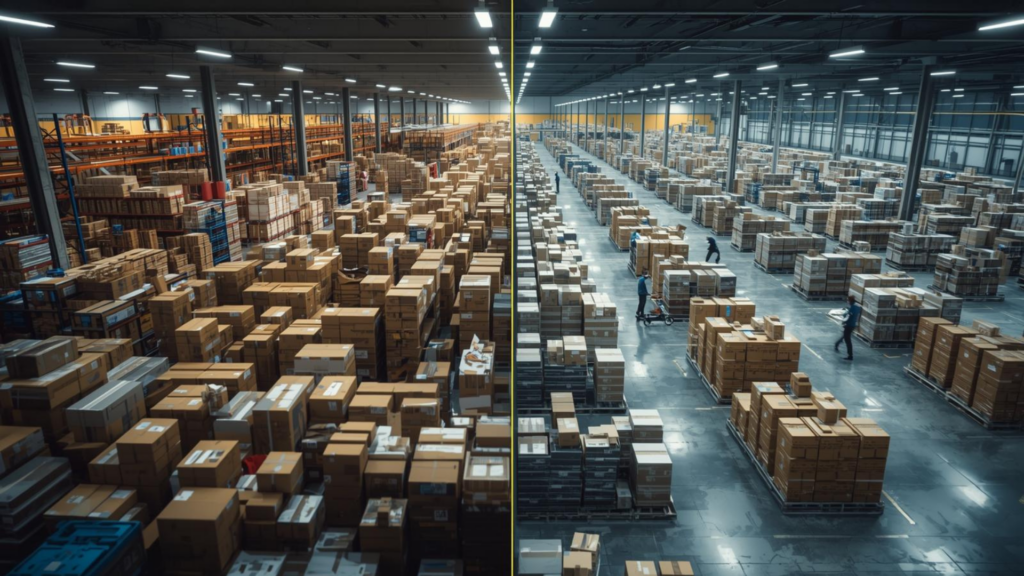
Poor warehouse planning drives inefficiencies, congestion, and rising costs. This analysis explores structural causes, trade-offs, and how businesses evaluate planning maturity in modern warehouse operations.
Introduction
Warehouse operations rarely fail because of a single decision; instead, breakdowns typically emerge from accumulated structural misalignments. Poor warehouse planning, therefore, should not be viewed as an isolated operational flaw but rather as a systemic weakness embedded in layout logic, workflow orchestration, and data visibility. While many SMEs initially treat planning as a one-time setup exercise, the reality is far more dynamic. As order volumes fluctuate and channel complexity increases, static planning assumptions quickly erode. Consequently, what once functioned adequately begins to generate congestion, inefficiency, and costly operational blind spots. This article examines how poor warehouse planning manifests, why it is often underestimated, and what strategic trade-offs businesses must evaluate as they scale.
The Structural Role of Poor Warehouse Planning in Operations

At its core, poor warehouse planning reflects a misalignment between physical infrastructure and operational logic. While businesses often focus on inventory levels or staffing efficiency, planning errors tend to originate from deeper architectural decisions.
For example:
Layout design may prioritize storage density over accessibility
Picking paths may ignore real-world movement patterns
Zoning strategies may fail to reflect SKU velocity distribution
As a result, poor warehouse planning creates friction across multiple layers of execution. Moreover, these inefficiencies compound over time, especially when businesses scale without revisiting foundational assumptions.
Additionally, warehouse planning is not just spatial—it is informational. When systems fail to synchronize inventory movement with physical layout, decision-making becomes reactive rather than predictive. According to research by the Material Handling Industry, inefficient warehouse layouts can reduce productivity by up to 30%, particularly in high-mix environments.
Why Poor Warehouse Planning Is Often Overlooked

1. Early-Stage Operational Bias
In many SMEs, especially across Southeast Asia, early growth prioritizes revenue generation over operational optimization. Therefore, warehouse planning is often treated as secondary.
However, this creates a structural lag:
Systems evolve slower than transaction volume
Processes become layered rather than redesigned
Manual interventions increase without visibility controls
Consequently, poor warehouse planning remains hidden until scaling pressures expose it.
2. Misinterpretation of Cost Drivers
Many businesses assume that inefficiencies stem from labor or inventory inaccuracies. However, poor warehouse planning often acts as the root cause behind both.
For instance:
Longer picking routes increase labor hours
Congested aisles lead to fulfillment delays
Inefficient storage reduces inventory turnover
A study published by Supply Chain Quarterly highlights that layout inefficiencies are frequently misclassified as labor productivity issues, leading to misdirected investments.
3. Static Planning in Dynamic Environments
Warehouse environments are inherently dynamic. Yet, many planning frameworks remain static.
This mismatch leads to:
Layouts designed for outdated SKU mixes
Storage systems that cannot adapt to demand spikes
Workflow bottlenecks during peak periods
Therefore, poor warehouse planning is not just about initial design—it is about the failure to evolve.
Common Warehouse Planning Mistakes and Their Trade-offs
Inefficient Layout Optimization
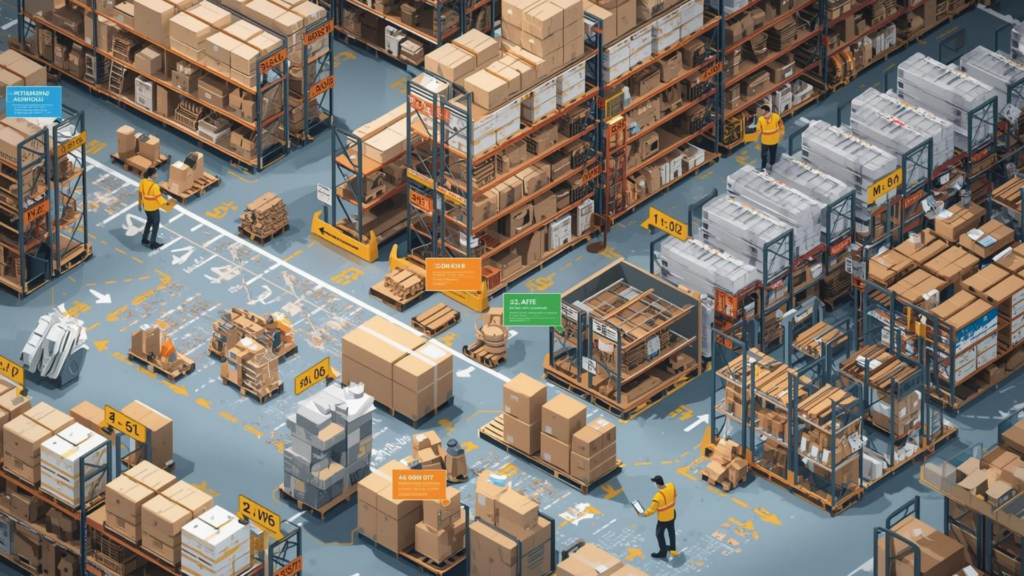
A common trade-off in warehouse planning involves storage density versus accessibility.
|
Strategy
|
Strength
|
Weakness
|
|---|---|---|
|
High-density storage
|
Maximizes space utilization
|
Slows picking efficiency
|
|
Wide-access layout
|
Improves movement speed
|
Reduces storage capacity
|
Poor warehouse planning often leans too heavily toward one side without considering operational context. As a result, businesses either face space constraints or productivity bottlenecks.
Misaligned SKU Placement
Another critical issue involves SKU velocity misalignment.
Fast-moving items stored in distant zones
Low-demand SKUs occupying prime locations
This leads to increased travel time and inconsistent picking efficiency. Furthermore, warehouse planning mistakes in SKU allocation often emerge when businesses lack real-time data visibility.
For reference, the Council of Supply Chain Management Professionals emphasizes that dynamic slotting strategies significantly improve fulfillment speed in multi-channel environments.
Fragmented Workflow Design

Workflow fragmentation occurs when processes are designed in isolation rather than as an integrated system.
Examples include:
Receiving and putaway processes that do not align with picking logic
Packing stations placed far from dispatch zones
Lack of synchronization between digital orders and physical movement
Therefore, poor warehouse planning creates operational silos that increase handling time and error rates.
Evaluating Warehouse Planning Systems: Strategic Considerations
When businesses assess their warehouse planning maturity, they typically evaluate across several dimensions.
Scalable systems support higher volumes but may lack adaptability
Flexible systems adapt to changes but may struggle with standardization
Poor warehouse planning often emerges when businesses fail to balance these dimensions.
Structured workflows improve consistency
However, overly rigid systems reduce responsiveness
Thus, planning frameworks must allow controlled flexibility rather than rigid enforcement.
Modern warehouses increasingly rely on real-time data integration. However:
High integration improves visibility
Yet, it introduces system dependencies and complexity
As a result, businesses must evaluate whether their infrastructure can support synchronized planning systems.
For further reading on warehouse optimization frameworks, refer to:
Where Poor Warehouse Planning Limits Business Growth
As businesses scale, poor warehouse planning transitions from an operational inconvenience to a strategic constraint.

Impact on Multi-Channel Fulfillment
With the rise of eCommerce and omnichannel retail:
Order profiles become smaller and more frequent
Picking complexity increases
Accuracy requirements tighten
Consequently, static planning models fail under dynamic demand patterns.

Impact on Cost Predictability
Poor warehouse planning introduces hidden costs:
Increased labor overtime
Higher error correction expenses
Inefficient space utilization
Moreover, these costs are often variable and unpredictable, making financial planning more difficult.

Impact on Customer Experience
Delays, inaccuracies, and stock inconsistencies ultimately affect customer satisfaction. While businesses may invest in front-end marketing, backend inefficiencies undermine delivery performance.
Therefore, warehouse planning becomes a direct contributor to brand perception.
From Planning Limitations to System Evolution

At a certain stage, businesses recognize that incremental adjustments are insufficient. Instead, structural redesign becomes necessary.
This is where warehouse management systems (WMS) enter the discussion—not as tools, but as operational frameworks.
A purpose-built system introduces:
Real-time inventory visibility
Dynamic slotting capabilities
Workflow orchestration across functions
For example, solutions like PayRecon WMS represent one category of systems designed to address planning limitations through integrated control layers. However, adopting such systems involves trade-offs:
Implementation complexity
Process standardization requirements
Organizational change management
Therefore, businesses must assess readiness rather than react impulsively.
Conclusion
Poor warehouse planning is not merely a tactical oversight—it is a structural limitation that shapes operational efficiency, scalability, and long-term competitiveness. While early-stage businesses may tolerate inefficiencies, growth inevitably amplifies these weaknesses. Moreover, as operational complexity increases, the cost of inaction rises disproportionately.
Strategically, businesses must recognize when their current planning frameworks no longer align with operational demands. At that point, incremental fixes become insufficient, and system-level transformation becomes necessary. Warehouse management platforms, including solutions such as PayRecon WMS, then emerge as part of a broader evolution toward integrated, data-driven operations.
Ultimately, the decision is not about adopting a system, but about redefining how warehouse planning supports sustainable growth.